Ways to distinguish a high-quality blanket from a low-quality one when buying.
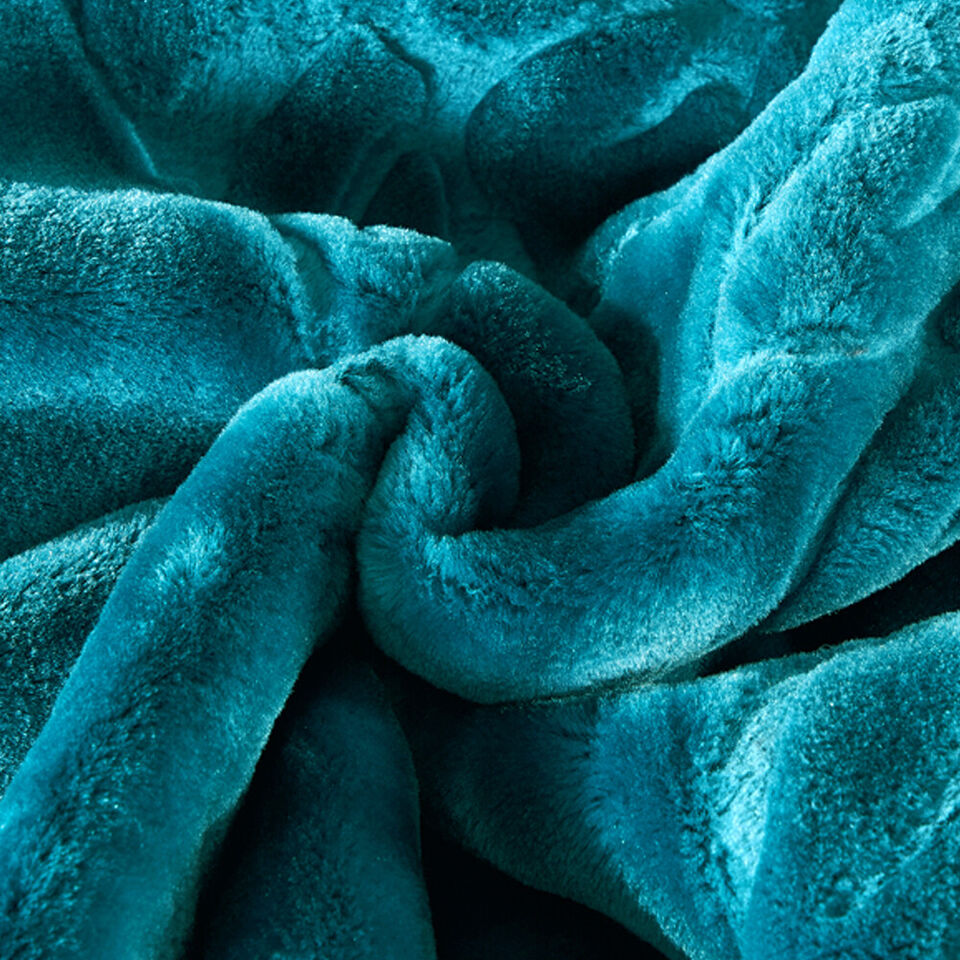
Ways to distinguish a high-quality blanket from a low-quality one when buying.
Each type of blanket has its specific application, and it should not be considered as low-quality based solely on its type. To distinguish between high-quality and low-quality blankets in each category, the following points can be considered:
-
The strength of the fibers should not be lower than usual, meaning that when stretched with a normal force, the fibers should not come off the blanket.
-
The visible thickness should be appropriate for the weight of the blanket. Blankets that appear thick despite being lightweight typically lose their visible thickness and change shape after washing.
-
The actual fiber density is when the blanket feels "solid."
-
The fiber density across the surface of the blanket should be uniform, and the background should not be visible through the fibers.
-
There should be no noticeable defects or color imperfections in the design regarding color contamination.
-
For single-color blankets, there should be no noticeable color difference between the left and right sides or between the beginning and end.
-
The degree of warping (the blanket’s deformation from a rectangle to a parallelogram) should not be excessive. Warping can be detected by folding the blanket in half and comparing the two corners; if the other corners don’t align due to warping, this can be measured.
-
The seam binding should be intact, and the edges should not have any loose threads.
-
The color of the binding should match the blanket color.
Write your comment.
Your email address will not be published. Required fields are marked *